Tripp Lite Technology — Engineering at the Component Level

Deep-dive into the ASIC architecture, security frameworks, and standards compliance that define Tripp Lite network equipment performance.

Core Technology Pillars

Four engineering disciplines that separate Tripp Lite from commodity network hardware.
Tripp Lite custom ASIC switching architecture

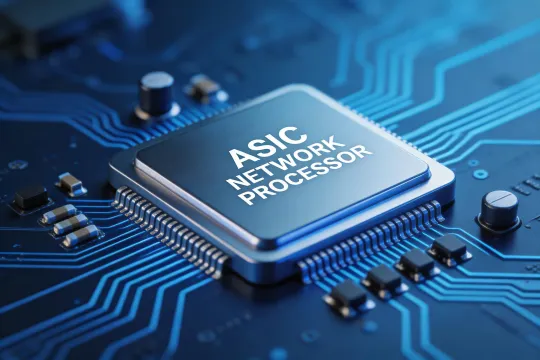
Proprietary ASIC Switching Architecture

Our custom-designed switching silicon delivers deterministic cut-through forwarding at 480 Gbps aggregate throughput. Unlike merchant-silicon competitors, every pipeline stage is optimized for enterprise traffic profiles — delivering measured latency under 800 nanoseconds across all port configurations from 1G to 100G.

Key specifications validated per RFC 2544 and ITU-T Y.1564:

  • Packet buffer: 64 MB shared memory, dynamic allocation
  • MAC table: 128K entries with hardware-accelerated learning
  • ACL entries: 16K in hardware, wire-speed enforcement
  • Multicast groups: 8K L2/L3 entries
MACsec hardware encryption technology

Hardware-Level Zero Trust Security

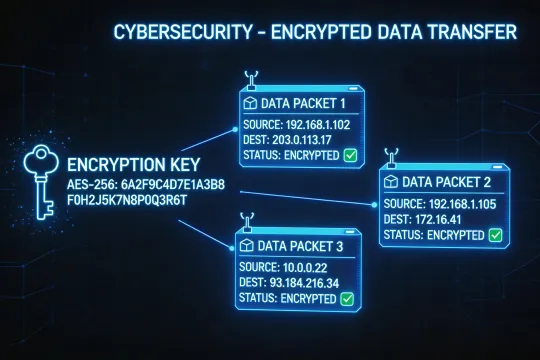
Every Tripp Lite managed switch includes a dedicated MACsec 256-bit AES-GCM encryption engine on each port — not shared across the backplane. This architecture ensures line-rate encrypted forwarding without throughput degradation.

The zero-trust framework includes:

  • 802.1X port-level authentication with dynamic VLAN assignment
  • Microsegmentation via hardware-enforced ACLs per VLAN
  • RADIUS/TACACS+ with fallback local authentication
  • Hardened firmware image — all unnecessary services disabled at factory
  • Signed firmware with secure boot chain verification
Advanced PoE++ power management

Intelligent PoE++ Power Management

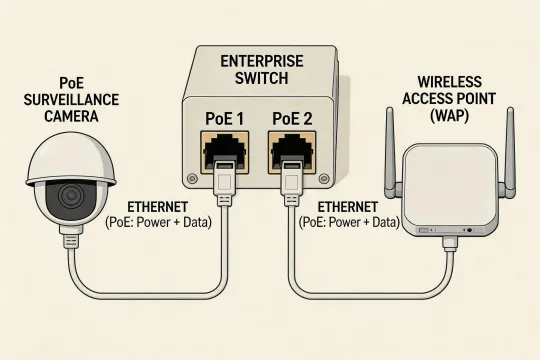
Our PoE switches support IEEE 802.3bt Type 4 delivering up to 90W per port. The proprietary Dynamic Power Allocation (DPA) algorithm continuously monitors connected device requirements and redistributes available power budget in real time.

Engineering specifications:

  • Total PoE budget: up to 2,400W per switch
  • Per-port power priority with automatic load shedding
  • Power scheduling: per-port time-based on/off policies
  • LLDP-MED power negotiation for IP phones and APs
  • PoE fault detection with automatic power cycle recovery
NEBS Level 3 environmental validation

NEBS Level 3 Environmental Validation

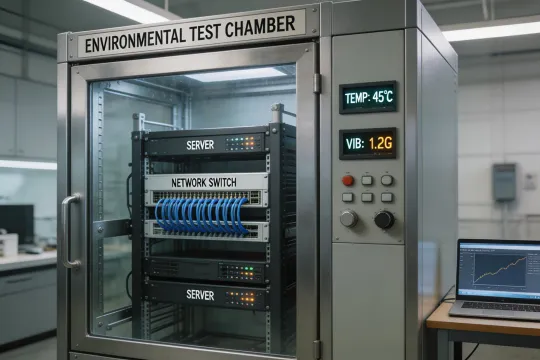
All carrier-grade platforms undergo full NEBS Level 3 validation in our in-house environmental test lab per Telcordia GR-63-CORE and GR-1089-CORE. This includes seismic Zone 4 shake testing, airborne contamination exposure, and thermal cycling from -5°C to +55°C operating range.

Additional environmental certifications:

  • MIL-STD-810H: vibration, shock, humidity, altitude
  • FCC Part 15 Class A electromagnetic emissions
  • UL 62368-1 safety listing
  • ETSI EN 300 019 transportation and storage classes

Technology Selection Considerations

Honest engineering means acknowledging trade-offs. Here are two infrastructure decisions every network architect faces — and how we approach each.

Single-Vendor Stack vs. Open/Disaggregated Networking

Integrated single-vendor stacks — including Tripp Lite's own — offer a unified management plane, single point of support, proven interoperability, and faster deployment. The trade-off: potential vendor lock-in, higher hardware costs, and slower adoption of community-driven innovations.

Open and disaggregated approaches (OpenConfig, SONiC on white-box switches) offer best-of-breed component selection, lower hardware costs, and flexibility. The trade-off: integration complexity, fragmented support across multiple vendors, and longer qualification cycles.

Tripp Lite supports OpenConfig and NETCONF/YANG on our managed platforms, enabling hybrid architectures where operators can adopt open management tooling without sacrificing the reliability of purpose-built hardware.

On-Premises Core vs. Cloud-Native Network Functions

On-premises hardware provides full data sovereignty, deterministic latency, and proven reliability for mission-critical voice and data. Carriers and enterprises with strict regulatory requirements often prefer this model.

Cloud-native and NFV architectures offer elastic scaling, faster feature deployment, reduced CAPEX through shared infrastructure, and alignment with DevOps practices. The trade-off: dependency on cloud provider SLAs, less control over infrastructure, and potential latency variability.

Our carrier-grade routers serve both models: they function as traditional appliances and also support containerized network functions (CNFs) for operators transitioning to cloud-native cores at their own pace.

Standards & Compliance

Tripp Lite actively participates in standards development and validates every product against the applicable specifications.

IEEE 802.3

Full compliance with Ethernet standards from 1G through 100G, including 802.3bt (PoE++) and 802.1AE (MACsec).

ITU-T / MEF

Y.1564 service activation testing, G.8032 ERPS ring protection, and MEF CE 2.0 carrier Ethernet certification.

NIST / CIS

Firmware hardening aligned with NIST 800-53 controls and CIS Benchmarks for network devices.

Telcordia GR

NEBS Level 3 per GR-63-CORE (physical) and GR-1089-CORE (EMC), validated in-house.

Applicability & Known Limitations

No network platform is universally optimal. Understanding where our equipment excels — and where it does not — helps you make the right deployment decision.

Temperature & Environment

Standard managed switches are rated for 0°C to +50°C operating range. Deployments in outdoor cabinets, factory floors, or extreme climates require our ruggedized (-40°C to +75°C) models, which carry a 15-20% cost premium over indoor equivalents.

PoE Budget Constraints

While individual ports support up to 90W (802.3bt Type 4), the total switch PoE budget of 2,400W means a fully loaded 48-port switch cannot deliver maximum power to every port simultaneously. Deployments exceeding 50W average per port require power budget planning with our DPA calculator tool.

Proprietary ASIC Trade-off

Our custom silicon delivers deterministic latency but does not support P4-programmable pipelines. Operators requiring fully programmable data planes for experimental protocols should evaluate merchant-silicon alternatives. Our roadmap includes programmable extensions targeted for Q3 2027.

400G Readiness

Current platforms support up to 100G per port. 400G uplink modules are in qualification testing (expected GA H1 2027). Customers planning spine-layer 400G fabrics within the next 12 months should discuss transition options with our architecture team.

Wireless AP Ecosystem

Tripp Lite access points require our centralized controller for advanced features (roaming, analytics, RF optimization). Third-party AP management platforms are not supported. Organizations with existing multi-vendor wireless deployments should evaluate integration requirements before procurement.

Geographic Support Coverage

On-site deployment engineering and advance hardware replacement are available in 42 of our 65 served countries. The remaining 23 markets are supported via authorized channel partners with 48-hour response SLAs, compared to the direct 4-hour commitment in primary markets.

Explore the Engineering Behind Our Products

Request access to technical white papers, test reports, and detailed specification sheets from our engineering team.